
Indian counsellor in Melbourne
Therapy with someone who already understands the culture, the family expectations and the language. Sessions in Hindi, Punjabi, Gujarati, Urdu, Rajasthani or English, in person in Melbourne or online. I'm Shagoon Maurya, a registered counsellor and psychotherapist (ACA Level 2, PACFA).
If you've been looking for an Indian counsellor, therapist or psychologist in Melbourne, you probably already know why it matters. It isn't only about language. It's about not having to explain why you can't simply cut off a difficult parent, why leaving a marriage isn't only your decision, or why "just tell your family how you feel" is not straightforward advice.
Searching for a “psychologist”?
Therapy without the translation
Melbourne is home to one of Australia's largest Indian communities, across Point Cook, Tarneit, Craigieburn, Clayton, Box Hill and the CBD. Yet many people still end up sitting with a therapist who needs the cultural background explained before the real conversation can begin. That's exhausting, and it eats into the hour you came for.
Speak in your language
Hindi, Punjabi, Gujarati, Urdu, Rajasthani or English, whichever actually reaches the feeling.
Cultural context understood
Family duty, log kya kahenge, in-laws, izzat and the quiet stigma around mental health.
In person or online
Face to face in Melbourne, or secure video if you're across Victoria or interstate.
No referral needed
Start with a free 15-minute chat. No GP referral, no mental health care plan required.
What people bring to me
Anxiety and burnout from long hours and study pressure. Loneliness and homesickness after moving to Australia. Visa and PR stress. Guilt about the parents you left behind, and the expectation to send money or succeed visibly. Marriage and in-law conflict. Growing up between two cultures and never feeling fully at home in either. Sometimes simply the exhaustion of always being the strong one.
You shouldn't have to choose between a therapist who understands the research and one who understands your family. Here, you don't.
For students and new migrants
A lot of the people I see are international students and recent arrivals. The first year or two in a new country can be genuinely destabilising, and it often arrives with financial pressure, isolation and a strong sense that you cannot tell family back home you're struggling. That's a heavy thing to carry alone, and it's a very good reason to talk to someone.
Melbourne-specific pressures nobody warns you about
None of these are the reasons people give when they book. They surface in the third or fourth session, once the ordinary complaint has been cleared out of the way.
Migration is usually described in terms of visas and housing. The parts that actually bring people to therapy are rarely on that list.
Qualifications that do not transfer. Arriving as an engineer, an accountant or a doctor and finding the recognition process long, expensive or effectively closed. The financial cost is visible; the identity cost is not, and it is often the heavier one.
Visa uncertainty as a background hum. Years of not being able to plan more than eighteen months ahead affects people in ways they usually attribute to something else entirely. It is a genuine and continuous stressor, and it is exhausting in a way that is hard to name because nothing is actively going wrong.
The distance that becomes real during a crisis. A parent is admitted to hospital in India and you are thirteen hours away deciding whether to spend six thousand dollars and three weeks of leave. That decision, and the guilt attached to it either way, comes up constantly in my practice.
Isolation inside a large community. Melbourne has one of Australia's biggest Indian populations, which people assume means built-in support. In practice a large community can be harder, because everyone knows everyone and privacy is scarce.
For students, and for parents of students
International students carry a specific load: fees paid by a family that could not easily afford them, part-time work alongside a full course, and an unspoken instruction not to come home having failed.
The result is that struggling becomes unsayable. Students routinely tell me they have not mentioned to anyone at home that they are barely sleeping, or that the course is not what they expected, because the cost of the disappointment feels larger than the cost of continuing. That is a lonely position and it is treatable, mostly through work on the anxiety and on the standards being applied rather than through advice about study.
No GP referral is needed and no mental health treatment plan is required, which matters for students who are not eligible for Medicare and would otherwise assume therapy is out of reach.
Privacy in a community where everyone knows everyone
This is the most common reason people in Melbourne's Indian community do not seek help, and it deserves a direct answer rather than reassurance.
Nothing you say leaves the room. I do not inform your GP unless you ask me to, no letter goes anywhere, and there is no record accessible to family. The narrow exceptions are a serious risk to life or a court order, and I will set those out precisely at the start.
Practically, online sessions remove the exposure entirely: no building, no waiting room, nobody who might recognise you. A good number of my Melbourne clients take sessions from a parked car or an empty office rather than at home, which is entirely normal. If keeping this private from your family is part of what you need, say so in the first conversation and we will arrange around it. The wider South Asian context behind all of this is set out separately.
Qualified here, and culturally at home
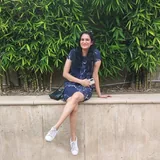
I bring together Western clinical training and a genuine, lived understanding of Indian culture. I'm registered with the Australian Counselling Association (Level 2) and PACFA, with postgraduate study in Counselling & Psychotherapy from the University of Adelaide. My approach is integrative and evidence-based, drawing on CBT, ACT, DBT-informed skills, mindfulness (MBCT), person-centred and solution-focused work. You can see my full qualifications.
Common questions
Yes. Sessions are available in Hindi, Punjabi, Gujarati, Urdu, Rajasthani and English, either in person in Melbourne or online across Australia.
I hold registration as a counsellor and psychotherapist, ACA Level 2 and PACFA, with postgraduate training in Counselling & Psychotherapy from the University of Adelaide. My client base is largely Indian and South Asian, seen in person in Melbourne or by video anywhere in Australia.
Yes. Family duty, community reputation, marriage and in-law dynamics, and the stigma around mental health are familiar territory. You won't have to explain the basics before we begin.
Yes. Many clients are students, skilled migrants and recent arrivals navigating homesickness, visa stress, isolation and the pressure of building a life far from family.
Let's talk, in your language
Book a free, no-obligation 15-minute consultation and see how it feels.
Book your free consult